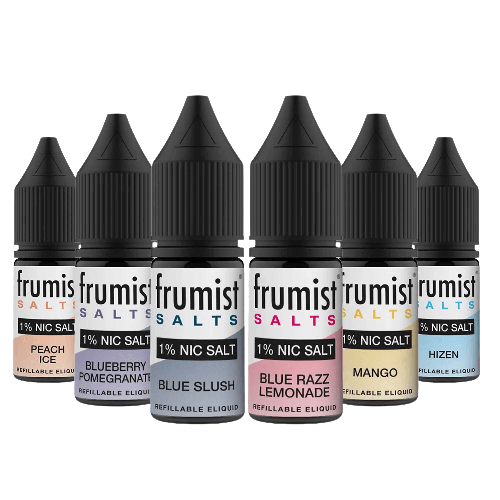


Mouth-to-Lung (MTL) and Direct-to-Lung (DTL) are two different vaping styles that describe how aerosol is inhaled and how a vaping device is designed to deliver it. MTL involves drawing aerosol into the mouth before inhaling, while DTL involves inhaling it directly into the lungs. MTL devices generally feature a tighter airflow, higher-resistance coils, and lower power output, whereas DTL devices typically have wider airflow, lower-resistance coils, and higher power requirements. Restricted Direct-to-Lung (RDL) vaping sits between these two styles, combining a more open airflow with a less unrestricted draw than traditional DTL devices.
What Is the Difference Between MTL, DTL and RDL Vaping?
MTL, DTL, and RDL describe different inhalation styles and the hardware characteristics commonly associated with them. The main differences involve airflow restriction, coil resistance, device power, aerosol characteristics, and the terminology used to describe vaping equipment.
- Mouth-to-Lung (MTL): Aerosol is drawn into the mouth before being inhaled, with a tighter and more restricted airflow.
- Direct-to-Lung (DTL or DL): Aerosol is inhaled directly into the lungs, typically using a more open airflow and hardware designed for greater air intake.
- Restricted Direct-to-Lung (RDL): A hybrid style featuring a more open draw than MTL but more restricted airflow than a typical DTL setup.
These terms are commonly used when comparing vaping devices and kits, tanks, pods, and coils. However, the actual characteristics of a device depend on its design and manufacturer specifications.
What Is Mouth-to-Lung (MTL) Vaping?
Mouth-to-Lung (MTL) vaping is an inhalation style in which aerosol is drawn into the mouth before being inhaled into the lungs. MTL devices typically feature a tighter draw that may feel more familiar to adult smokers accustomed to the inhalation pattern of traditional cigarettes.
MTL vaping hardware is commonly associated with:
- More restricted airflow.
- Higher-resistance coils.
- Lower-power device configurations.
- Smaller or compact pod systems.
- E-liquids with higher PG ratios, depending on device compatibility.
The restricted airflow of MTL devices influences the overall draw and sensation. Some users describe a more pronounced throat sensation compared with more open airflow configurations, although this varies with the device, e-liquid composition, nicotine content, and individual sensitivity.
MTL and cigarette smoking are not identical, and familiarity with the inhalation pattern does not mean vaping is harmless or equivalent to smoking.
What Is Direct-to-Lung (DTL) Vaping?
Direct-to-Lung (DTL), also known as Direct-Lung (DL) vaping, describes an inhalation style in which aerosol is drawn directly into the lungs rather than being held in the mouth first. DTL devices generally feature a more open airflow system and hardware designed to accommodate greater air intake.
DTL vaping hardware is commonly associated with:
- More open airflow.
- Lower-resistance coils, often referred to as sub-ohm coils.
- Higher-power device configurations.
- Larger tanks or devices designed for greater airflow.
- E-liquids with higher VG ratios, depending on hardware compatibility.
Because DTL devices are designed around a more open airflow and different hardware characteristics, they can produce different aerosol volumes and sensations from MTL devices. However, the experience varies significantly between devices and is not determined by airflow alone.
DTL devices are not interchangeable with every type of pod, coil, or e-liquid. Device compatibility and manufacturer specifications are essential when distinguishing between MTL and DTL hardware.
MTL vs DTL: Understanding the Differences
MTL and DTL vaping differ in their inhalation patterns, airflow characteristics, and commonly used hardware. These distinctions explain why the two terms are frequently used when categorising vape devices.
| Feature | MTL (Mouth-to-Lung) | DTL (Direct-to-Lung) |
|---|---|---|
| Inhalation style | Mouth first, then lungs | Directly into lungs |
| Airflow | Restricted or tighter | More open |
| Typical coil resistance | Higher resistance | Lower resistance, often sub-ohm |
| Typical power configuration | Lower power | Higher power |
| Common device type | Compact pod systems, MTL kits | Airier tanks and DTL devices |
| E-liquid compatibility | Often higher PG, depending on device | Often higher VG, depending on device |
| Aerosol characteristics | Generally less aerosol volume | Often greater aerosol volume |
| Draw sensation | Tighter | Airier |
These are general characteristics rather than universal rules. Some modern devices support multiple airflow configurations and coil options, allowing the same hardware platform to offer different draw characteristics.
What Is Restricted Direct-to-Lung (RDL) Vaping?
Restricted Direct-to-Lung (RDL) vaping is an inhalation style that sits between Mouth-to-Lung (MTL) and traditional Direct-to-Lung (DTL) vaping. It offers a more open draw than MTL but retains some airflow restriction compared with a fully open DTL configuration.
RDL is commonly associated with devices that offer adjustable airflow and coil options designed for a moderately open draw. The airflow characteristics, coil resistance, and device power vary depending on the specific hardware.
RDL is sometimes described as the middle ground between MTL and DTL because the terminology reflects a less restricted airflow without necessarily adopting the fully open draw associated with traditional DTL devices.
MTL vs DTL: Which Is the Difference in Vaping Experience?
MTL and DTL are often discussed in relation to airflow, aerosol volume, flavour perception, and throat sensation. However, these characteristics are subjective and can vary significantly between individuals and devices.

MTL vs DTL for Beginners
MTL and DTL devices have different draw characteristics, but neither vaping style is risk-free or recommended for people who do not use tobacco or nicotine products.
MTL devices are often described as having a tighter draw, while DTL devices generally feature a more open airflow. These differences relate to hardware design and inhalation patterns rather than making one vaping style safer than the other.
MTL vs DTL for Flavour
Flavour perception varies between MTL and DTL devices because airflow, aerosol characteristics, e-liquid composition, and device design all influence how flavours are perceived.
Some users report more concentrated flavour sensations with MTL devices, while others prefer the flavour characteristics of DTL devices. There is no universal rule that MTL always produces better flavour or that DTL is inherently more flavourful.
MTL vs DTL for Aerosol and Clouds
MTL and DTL devices can produce different aerosol volumes because their airflow systems, coil configurations, and power characteristics differ.
DTL devices are generally associated with greater aerosol production, while MTL devices typically produce less visible aerosol. Actual aerosol production depends on the device, coil, liquid composition, and operating conditions.
Greater aerosol production does not indicate a safer vaping experience.
MTL and DTL Hardware: Airflow, Coils and Device Design
MTL and DTL vaping devices are designed around different airflow characteristics, coil configurations, and power requirements. Understanding these hardware differences helps explain why the two categories are not always interchangeable.
Airflow
Airflow is one of the most noticeable differences between MTL and DTL hardware. MTL devices generally have more restricted airflow, while DTL devices are designed to allow greater air intake.
Airflow design influences the draw resistance and the characteristics of the aerosol produced. Some devices allow airflow adjustments, which may provide different draw characteristics within the limits of the hardware.
Coil Resistance
Coil resistance, measured in ohms (Ω), is one of the hardware specifications used to distinguish different vaping configurations.
MTL hardware is commonly associated with higher-resistance coils, while DTL hardware often uses lower-resistance, sub-ohm coils. Coil resistance alone does not determine whether a device is suitable for MTL or DTL, because airflow design, power requirements, and manufacturer specifications also matter.
Wattage and Power Output
MTL and DTL devices may operate at different power levels depending on their coil resistance and design.
Lower-power configurations are commonly associated with MTL hardware, whereas DTL devices often use higher-power configurations. However, wattage ranges vary significantly between devices, and the manufacturer’s specifications determine the compatible operating range.
MTL E-Liquid: VG/PG Ratios and Nicotine Formulations
MTL-compatible e-liquids are often associated with higher propylene glycol (PG) ratios, although the appropriate e-liquid depends on the device and coil specifications.
PG and VG are the two main base ingredients commonly used in e-liquids:
- Propylene Glycol (PG): A thinner liquid that can contribute to flavour delivery and throat sensation.
- Vegetable Glycerine (VG): A thicker liquid commonly associated with denser aerosol production.
Some e-liquids are formulated using a 50:50 VG/PG ratio, while others contain a greater proportion of PG or VG. The appropriate formulation varies according to the device’s wicking system and design.
The e-liquid range includes different formulations, but not every e-liquid is compatible with every pod, tank, or coil.
Nicotine Salts and MTL Devices
Nicotine salts are a nicotine formulation commonly found in e-liquids, including products designed for certain pod systems. Their characteristics differ from freebase nicotine formulations, including differences in perceived throat sensation.
Nicotine salts may be present in products with relatively high nicotine concentrations, so product compatibility and nicotine content are important considerations. Nicotine is addictive, and vaping products containing nicotine are not risk-free.
DTL E-Liquid: High-VG Formulations
DTL hardware is commonly associated with e-liquids containing a higher proportion of vegetable glycerine (VG). VG is thicker than PG and is often used in formulations associated with denser aerosol production.
Higher-VG e-liquids may be unsuitable for some compact pod systems because the liquid viscosity may not match the wicking system. Compatibility depends on the coil design, wicking ports, and device specifications.
Some e-liquids are marketed with VG/PG ratios such as 70:30 or 80:20, but the appropriate formulation varies by device. A higher VG ratio does not automatically mean an e-liquid is suitable for every DTL device.
Frequently Asked Questions About MTL vs DTL Vaping
What Does MTL Mean in Vaping?
MTL stands for Mouth-to-Lung vaping. It describes an inhalation style in which aerosol is drawn into the mouth before being inhaled into the lungs. MTL devices are commonly associated with restricted airflow and higher-resistance coils.
What Does DTL or DL Mean in Vaping?
DTL stands for Direct-to-Lung, while DL is a shortened alternative for the same term. It describes an inhalation style in which aerosol is inhaled directly into the lungs. DTL devices are commonly associated with more open airflow and lower-resistance coils.
Is MTL or DTL Better for Flavour?
Neither MTL nor DTL is universally better for flavour because flavour perception depends on the e-liquid, device, airflow, coil configuration, and individual sensitivity. Some users prefer the flavour characteristics of MTL devices, while others prefer DTL devices. The difference is subjective rather than a universal technical rule.
What Is the Difference Between MTL, RDL and DTL?
MTL features a more restricted draw, RDL offers a moderately open draw, and DTL generally provides the most open airflow of the three. The terminology describes vaping styles and the hardware characteristics commonly associated with them. Actual airflow and performance vary between devices.
Can the Same Vape Be Used for MTL and DTL?
Some vape devices support multiple airflow settings or compatible coil options that can change their draw characteristics. However, not every device is designed for both MTL and DTL, and switching between configurations may require different components. Always consult the manufacturer’s specifications to determine the intended use of a device.
Conclusion
Mouth-to-Lung (MTL), Direct-to-Lung (DTL), and Restricted Direct-to-Lung (RDL) are three terms used to describe different inhalation styles and the hardware characteristics commonly associated with them. MTL generally features a tighter draw, DTL a more open airflow, and RDL a draw that falls between the two.
Understanding these terms helps explain how vaping devices differ in their airflow systems, coil resistance, power configuration, and e-liquid compatibility. However, the labels alone do not determine a device’s performance, and manufacturer specifications remain essential.
If you are researching vaping terminology and hardware, explore our vaping devices and e-liquids for additional information, or contact our team for help understanding product specifications.